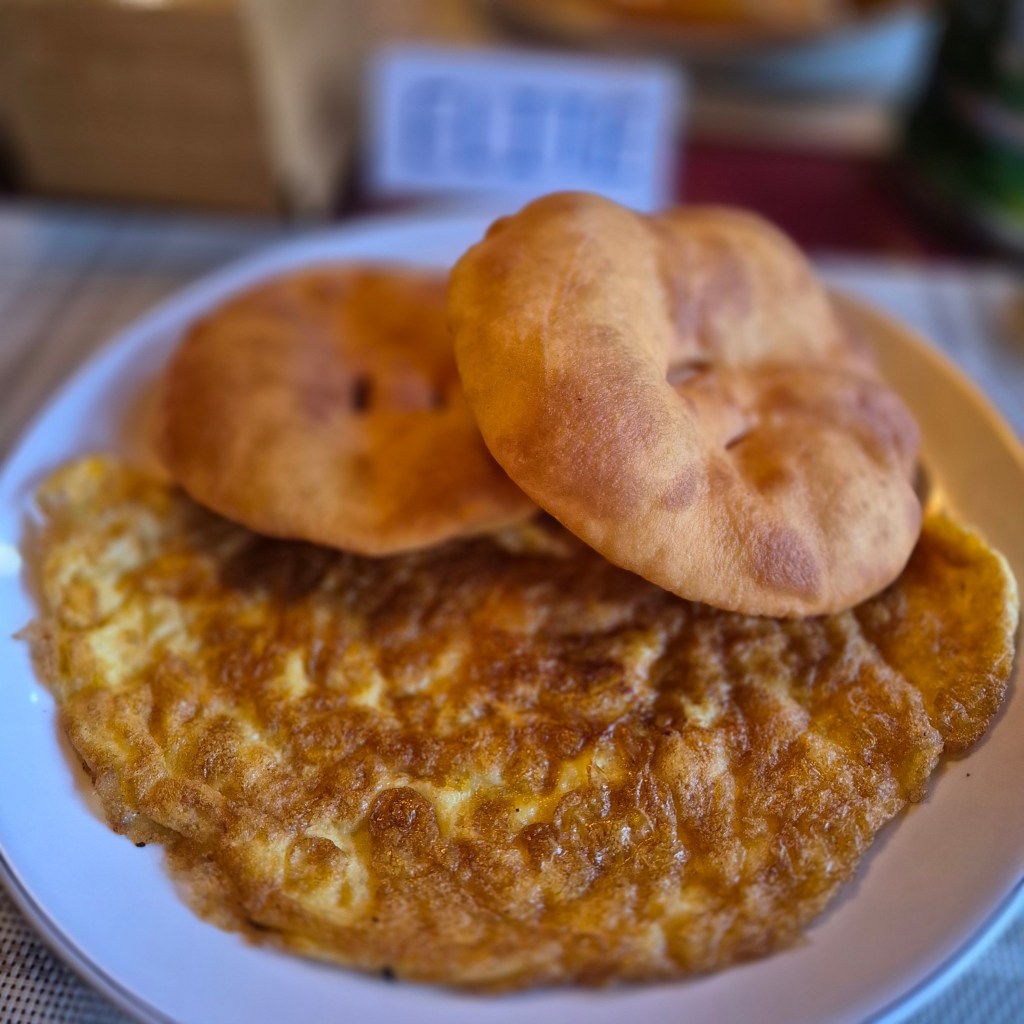
Another early start, another magnificent breakfast. Tibetan bread, jam, eggs, and masala tea were fast becoming the comforting staples of our morning routine. After wolfing it down, it was time to layer up again. The clouds from the previous day hadn’t budged, stubbornly wrapping the mountains in a cold, grey blanket. Not quite what we’d ordered, honestly. We were getting tantalising glimpses of the views, but in reality, the persistent cloud cover meant we’d seen precious little of the grand panoramas. It makes the hiking just that little bit tougher when the sun isn’t on your face, greeting you with those magnificent vistas.
Things were also starting to get noticeably harder in terms of altitude. We were all beginning to feel the effects in different ways; sleep was a bit more elusive, and our dreams had become incredibly vivid and strong at night. Even walking and talking simultaneously was becoming a minor challenge. Thankfully, there were no serious health issues, but everything just felt a little more effortful. Our nightly oxygen checks, however, continued to be strong, with all of us maintaining blood oxygen levels above 90%, which we were told was excellent at this altitude. Apparently, many people are much lower at this stage, so that was reassuring.
The first part of the hike led us through lush, green woodland, the trees draped in moss. The path itself was relatively flat as we hugged the high side of the river valley, making sure to keep a safe distance from the edge – the drop was steep and far, and there’d be no climbing back up after a fall down there. As we walked, we passed traditional houses, their farmers busy in their small plots of land. It was the season for digging up stored potatoes, and we saw a few farmers deep in holes, unearthing their winter stores, ready to plant for the summer. Potatoes, we learned, are one of the main staples for the people of these mountains.
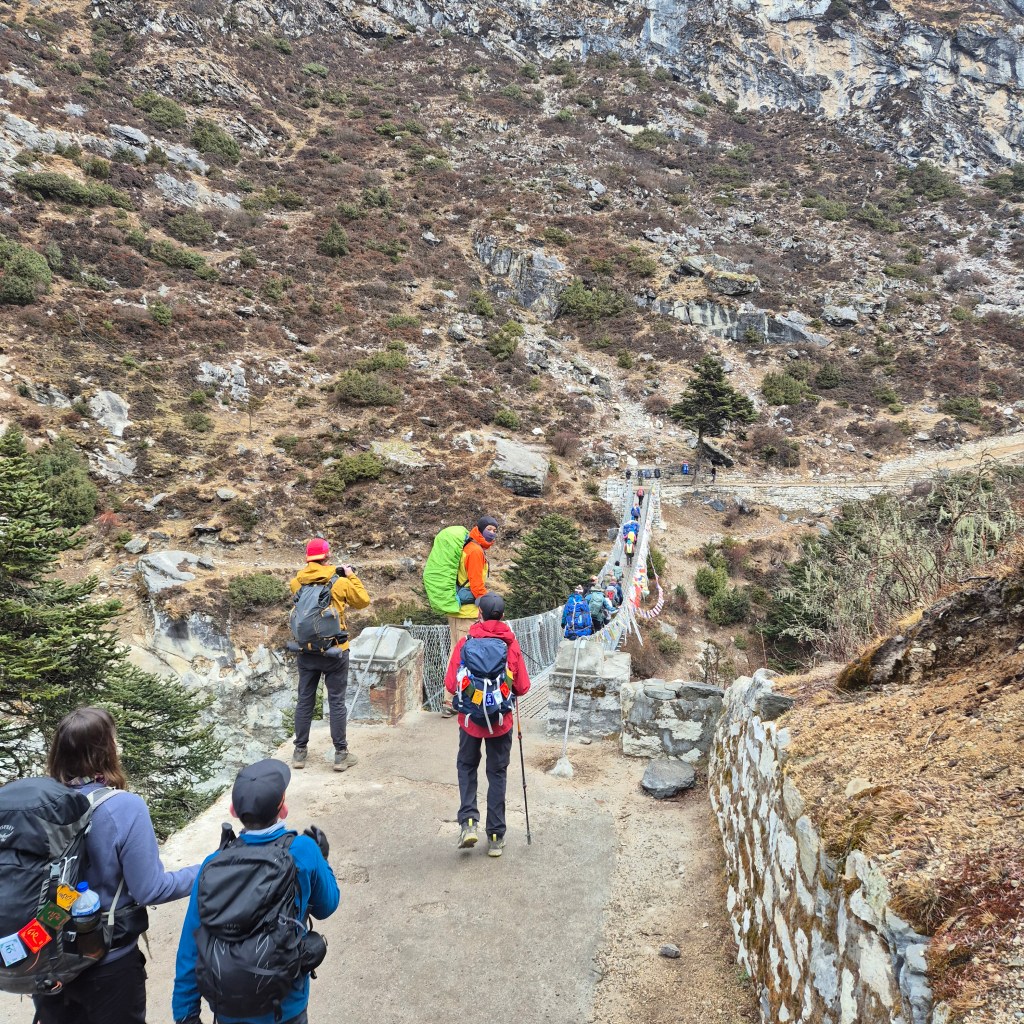
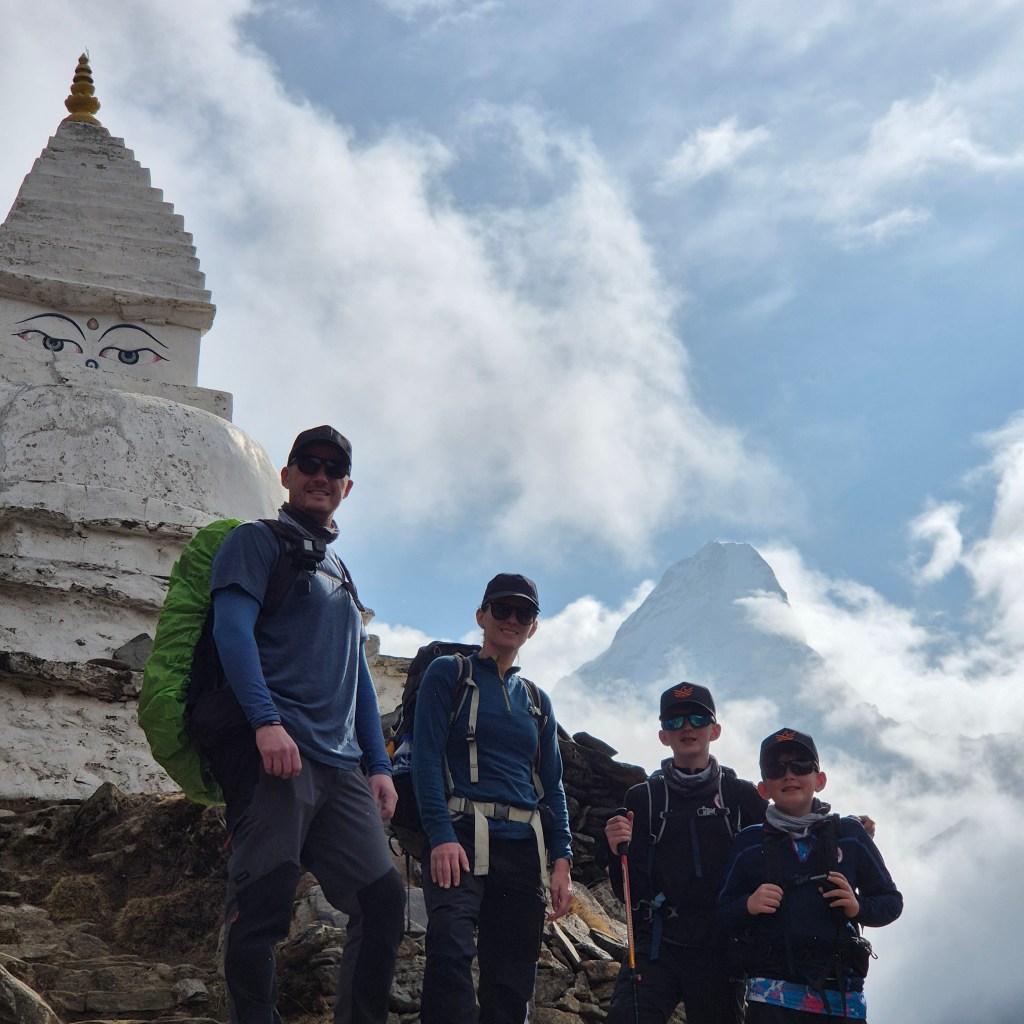
After about an hour’s hike, we emerged from the woods to a truly spectacular sight: the Imja Khola suspension bridge, spanning the roaring Imja Khola river. Crossing it felt like stepping into a different world. In an instant, the ecosystem shifted from lush forest to dry, arid scrub. It was quite a sudden, dramatic change. And it was precisely at this point, as if on cue, that the clouds finally broke, revealing the magnificent Ama Dablam mountain in all its breathtaking beauty. What a view! Even better, just up from the bridge, we found the Imja Khola stupa, creating a picture-perfect scene of Buddhist culture set against the towering Himalayan peaks. We were told Ama Dablam is actually harder to climb than Everest (despite not being over 8,000 metres), and apparently, people often “warm up” on Everest before attempting it! The trails here also became noticeably busier. It wasn’t just the sheer number of people heading up, but also the constant flow of big groups of mules and yaks coming down. This led to many inevitable stops on the trail, but at this altitude, you learn to embrace every opportunity to rest those burning legs and lungs.
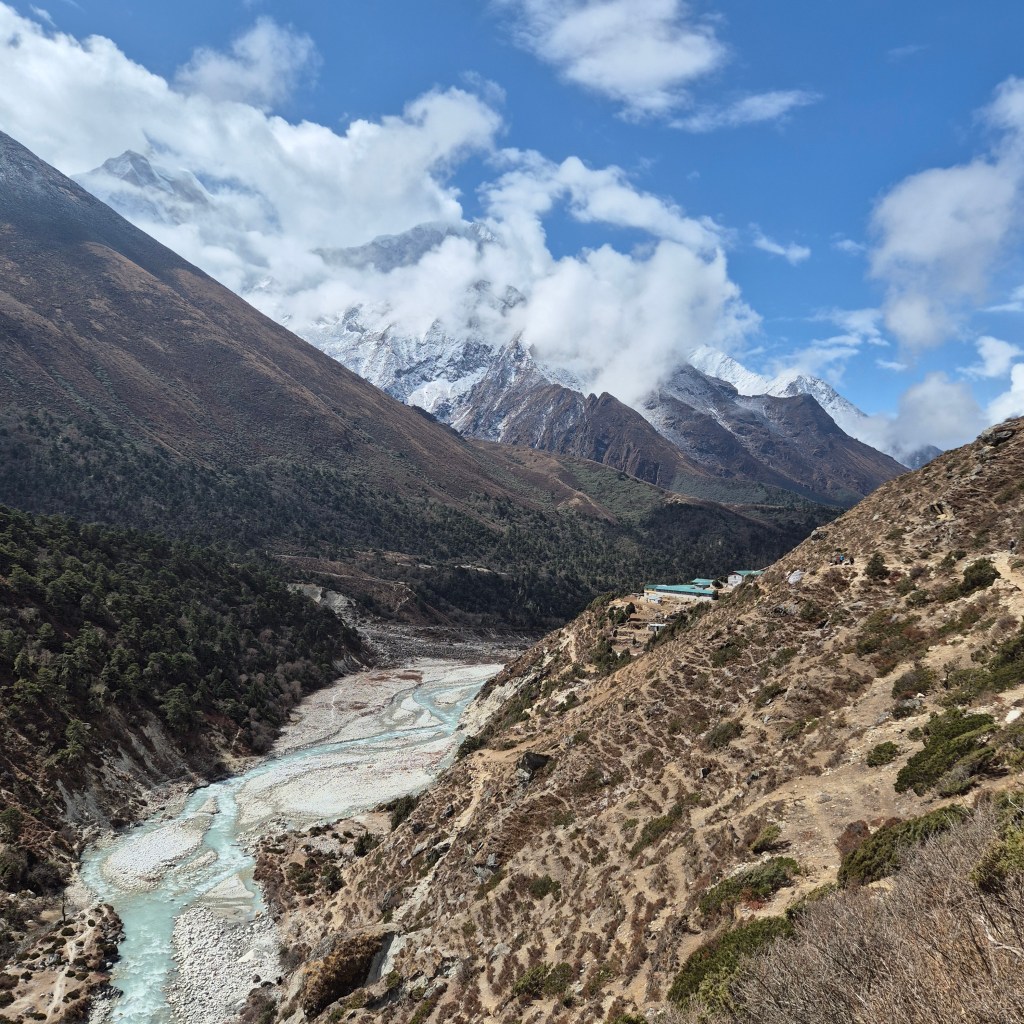
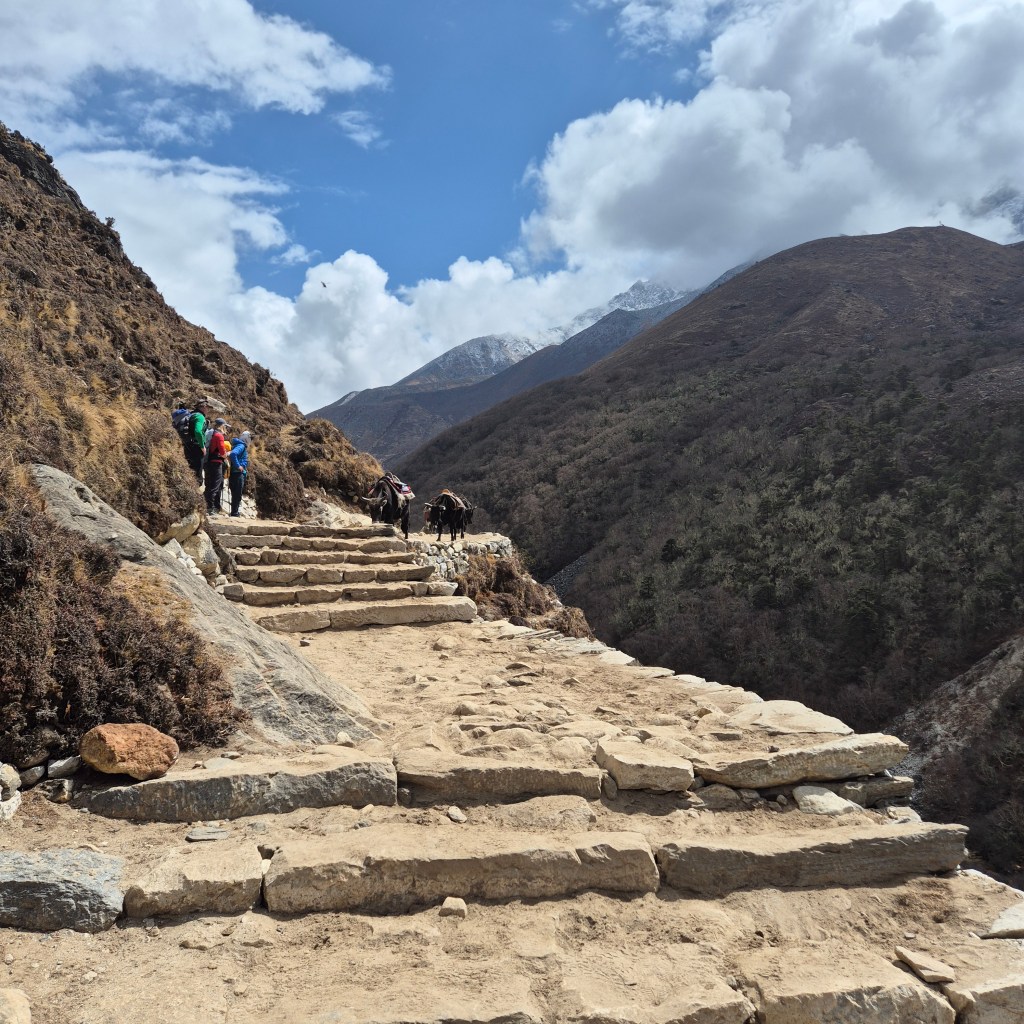
The trail continued to follow the river, but this time it was a steep climb up the side of the valley, fully exposed to the sun. It was a tough ascent, but the incredible views kept us going. We paused briefly in the village of Pangboche, where Elite Exped has a store. Here, our porters picked up an oxygen tank, just in case of emergencies! We thought this was an amazing thing to do, and it really underlined the importance both the company and our guides placed on our safety. Few other companies, we were told, go to such lengths.
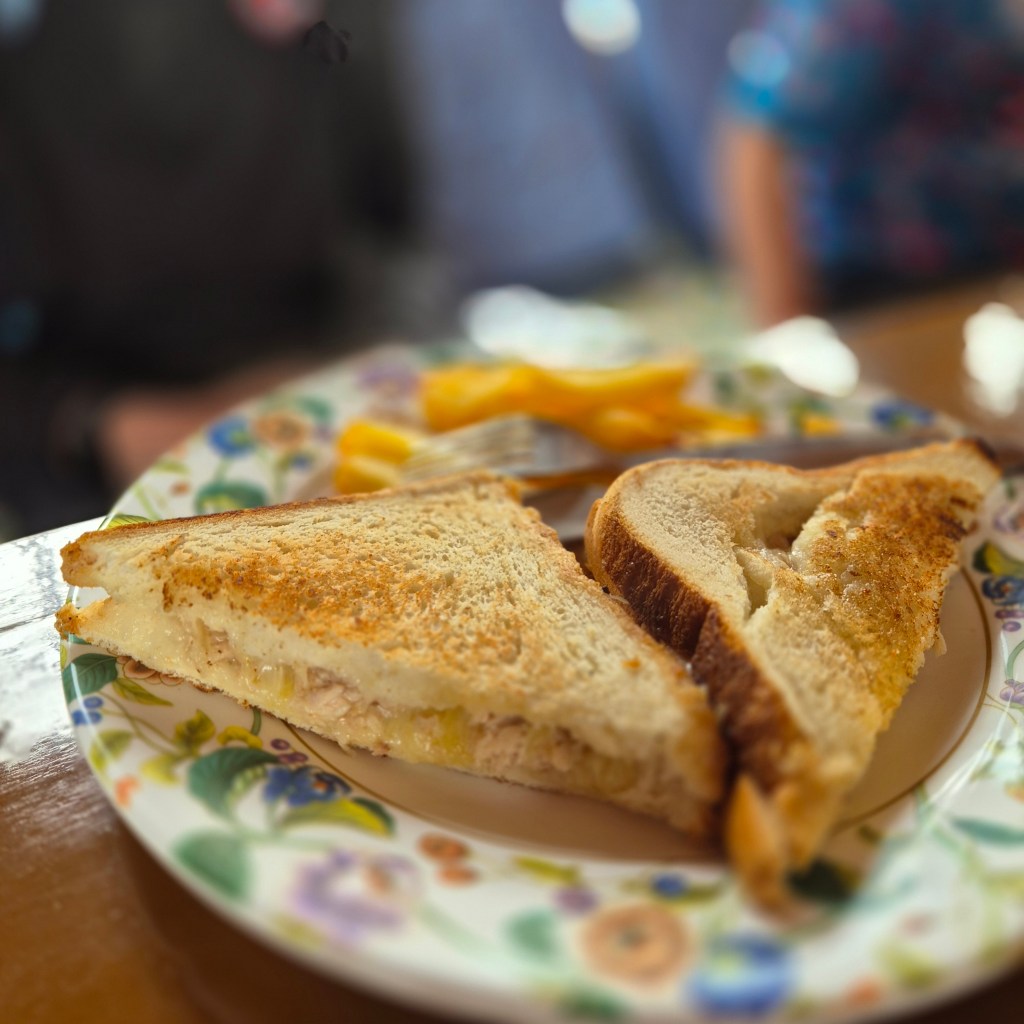
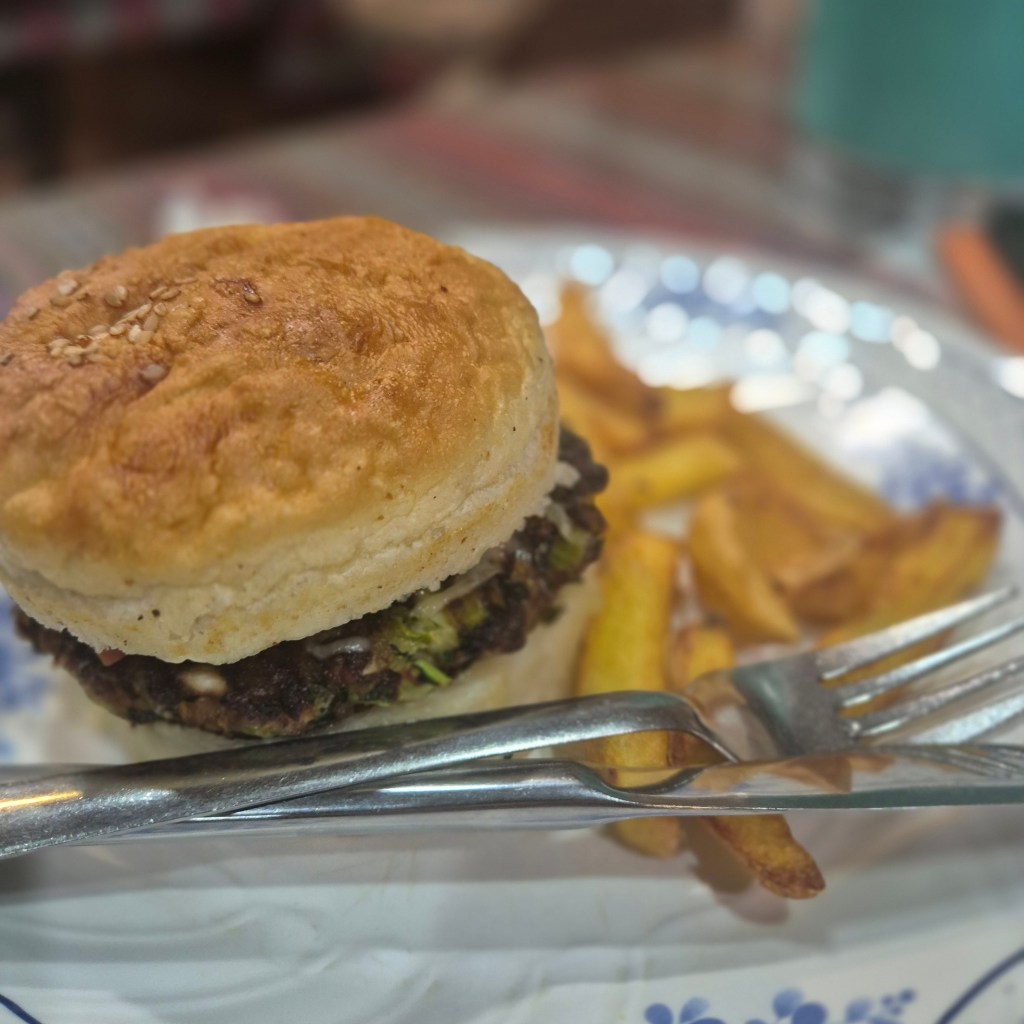
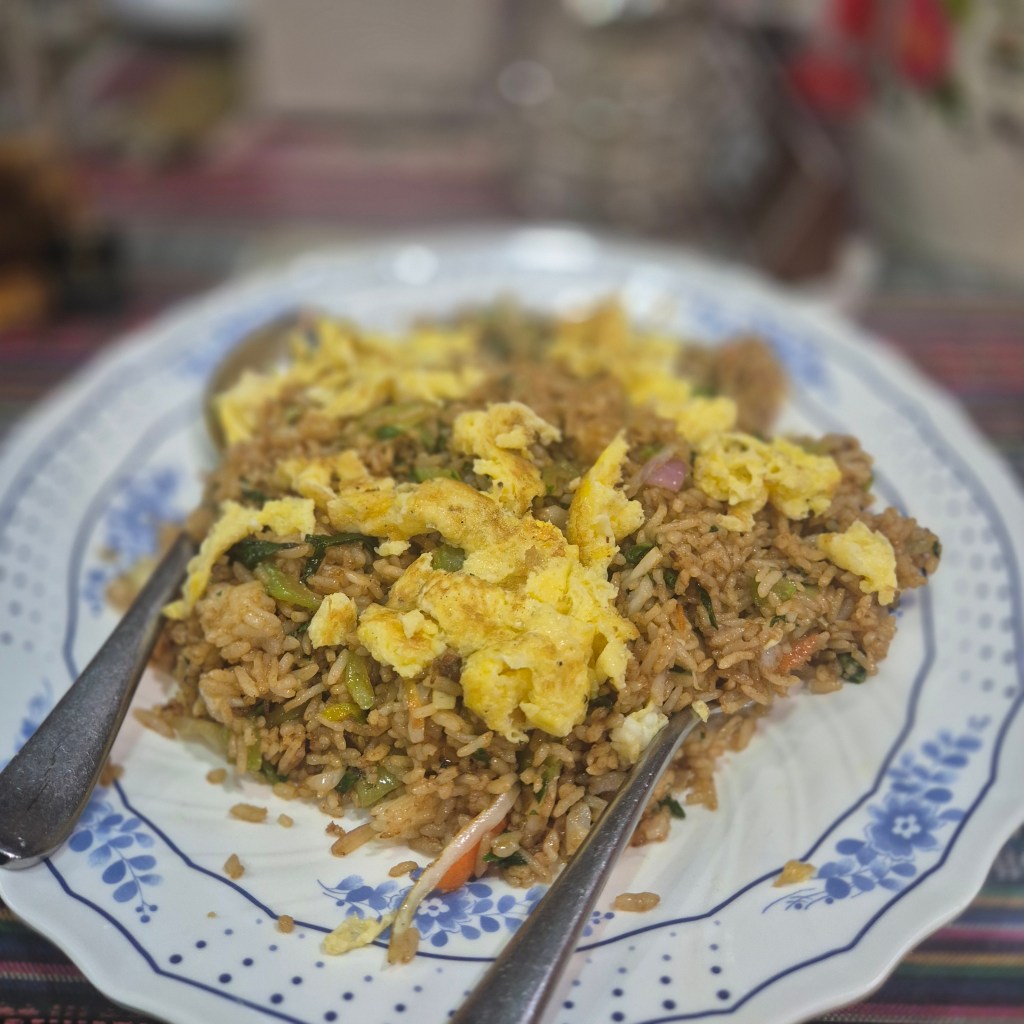
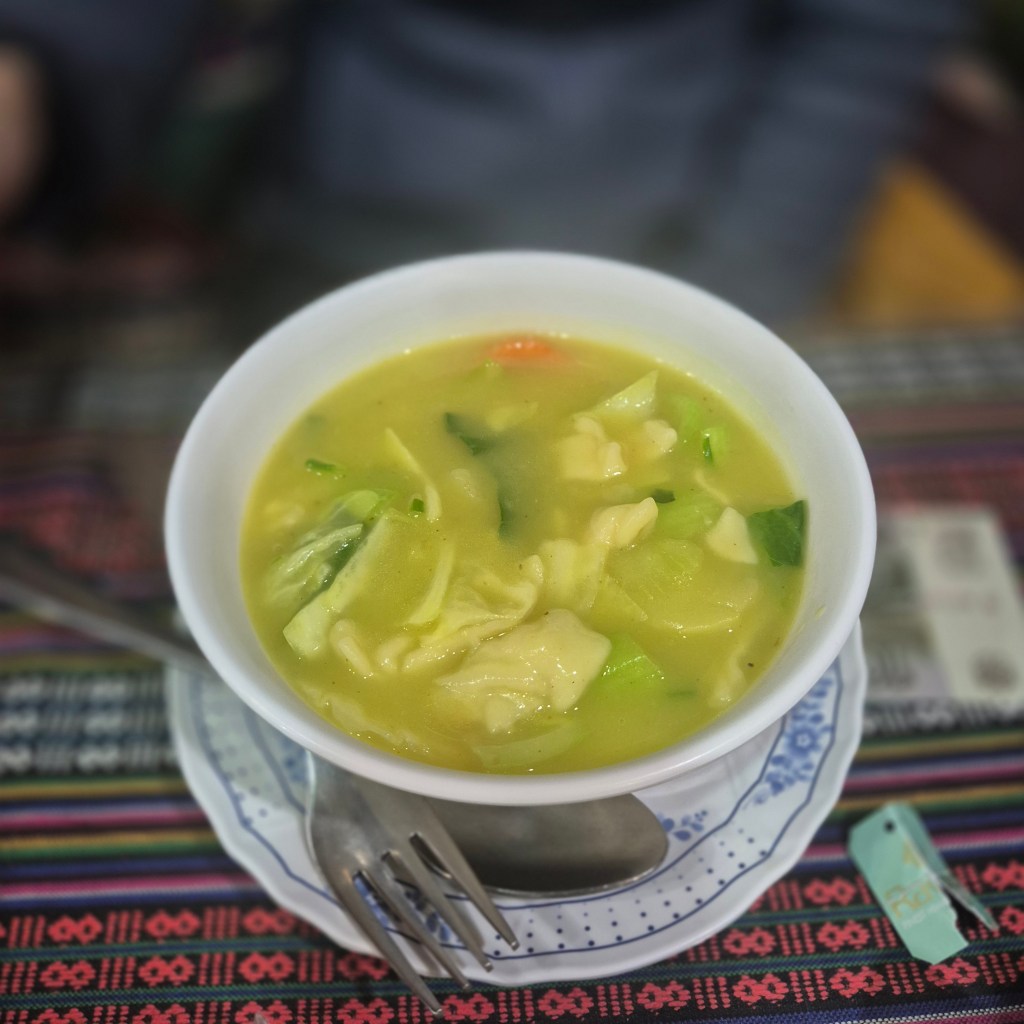
We carried on, hiking steadily up the hill on a good path towards the village of Shomare, where we stopped for a well-deserved lunch at the Shomare rest stop. The food was still great, though we were starting to notice the options reducing as we climbed higher, with almost every menu being the same. Not an issue, just an observation – the food was still delicious, filling, and perfectly fuelled us for the next stage of our day.
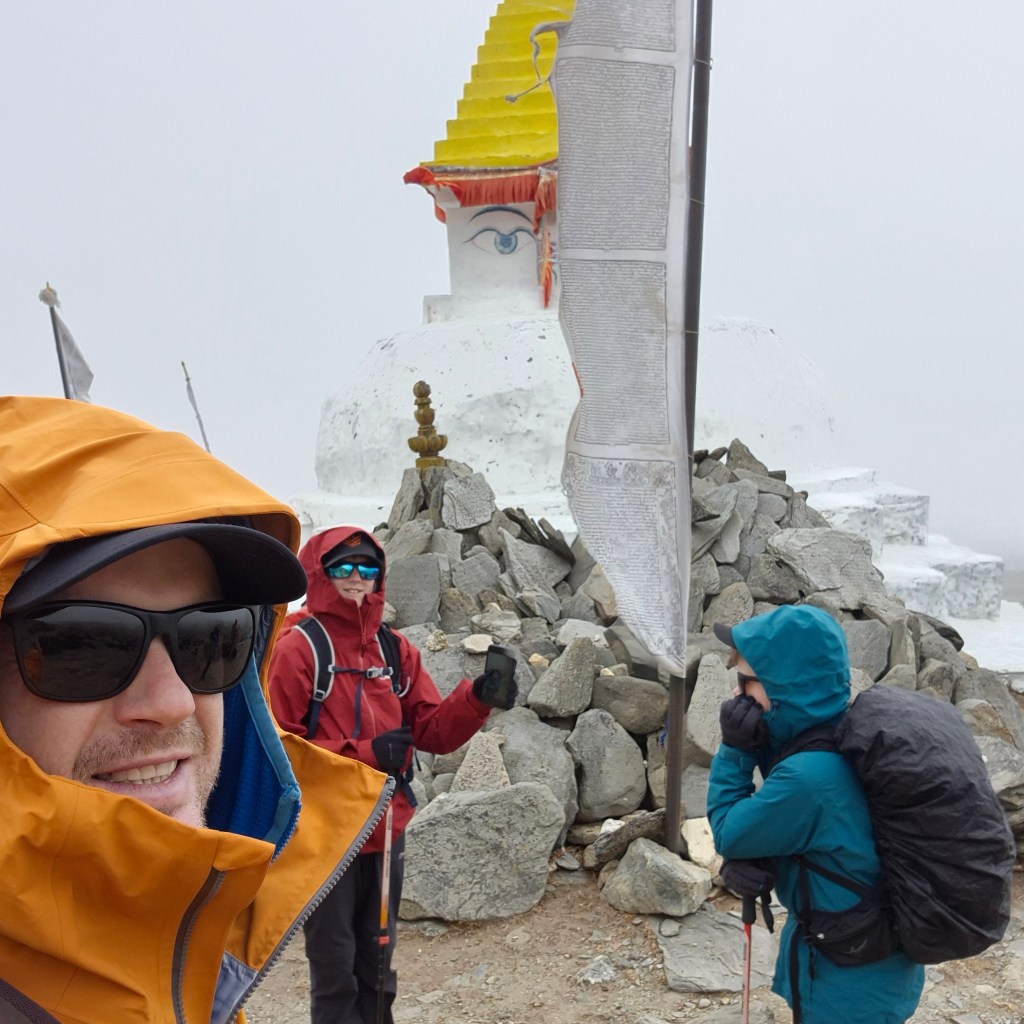
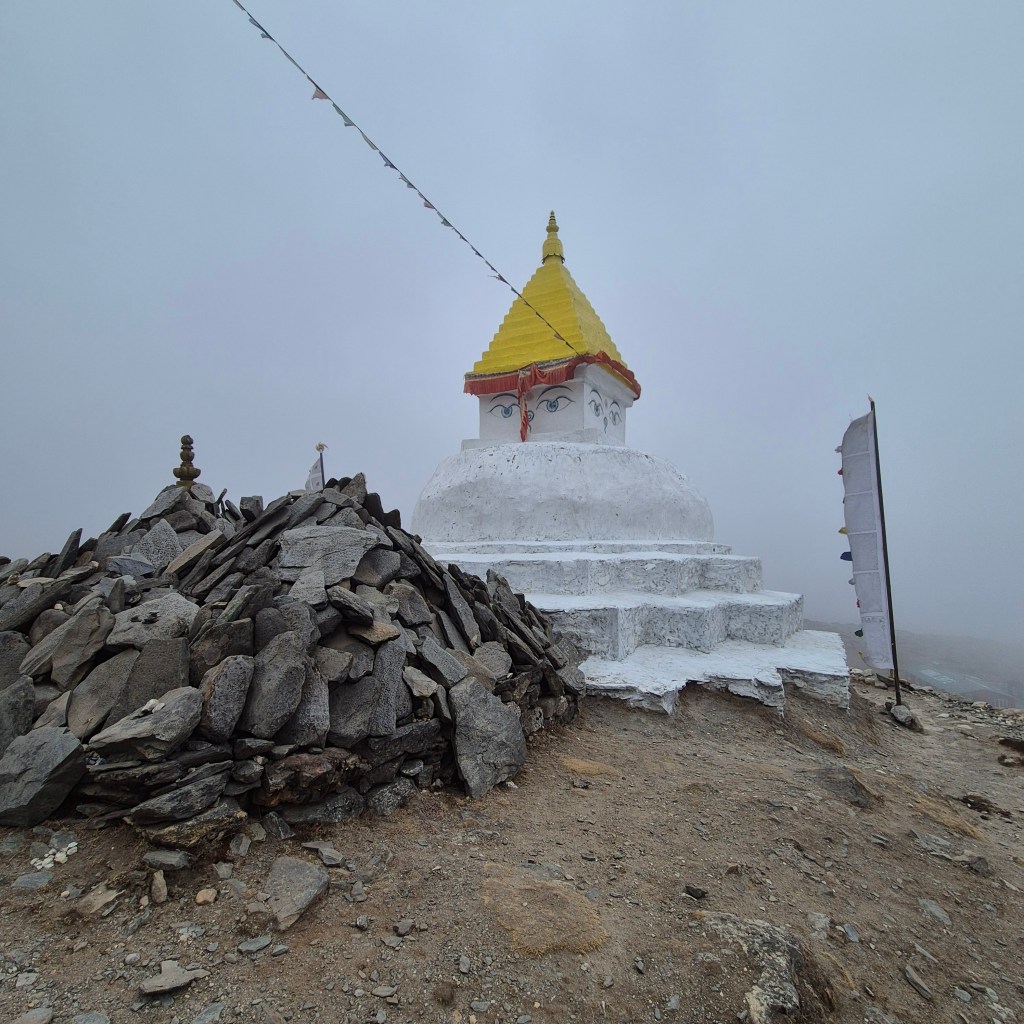
The rest of the afternoon saw us hiking a steady incline up the valley, continuing to follow the Imja Khola river. The scenery here had shifted quite significantly from the lush forest of the morning to the rugged, treeless, high-altitude landscape. The views were simply stunning; a description, or even photos, just don’t do justice to how magnificent and inspiring these vistas truly are. In the last hour of the hike, the clouds returned, bringing with them a light dusting of snow, making that final push to Dingboche just a little bit harder. We stopped at a magnificent stupa before finally heading down into the village to find our accommodation for the next two nights at the Hotel Dingboche Resort. Less of a tea house this time, and more of a basic hotel, with simple rooms and a nice eatery. After a good chill, drinking more tea, we had a good dinner and, as is now the norm, exhausted went to bed in an attempt to sleep.
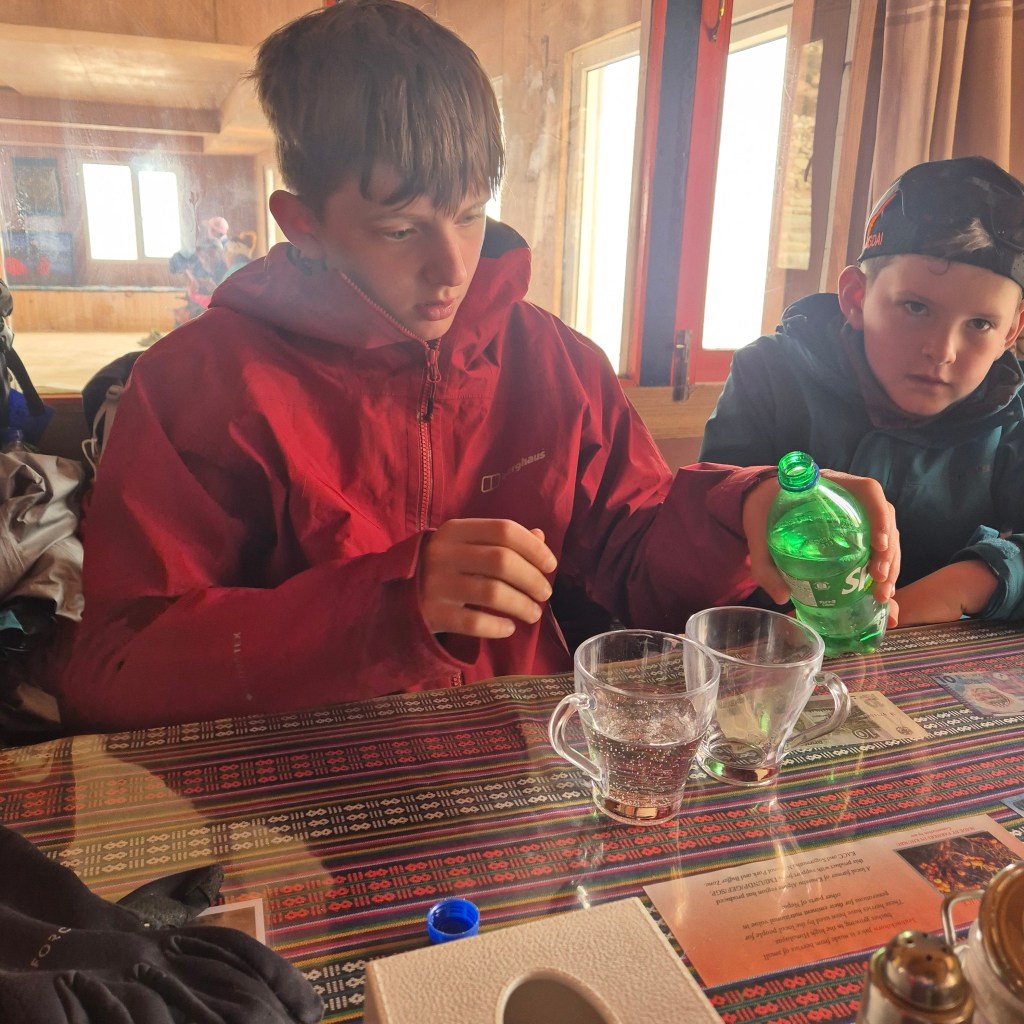
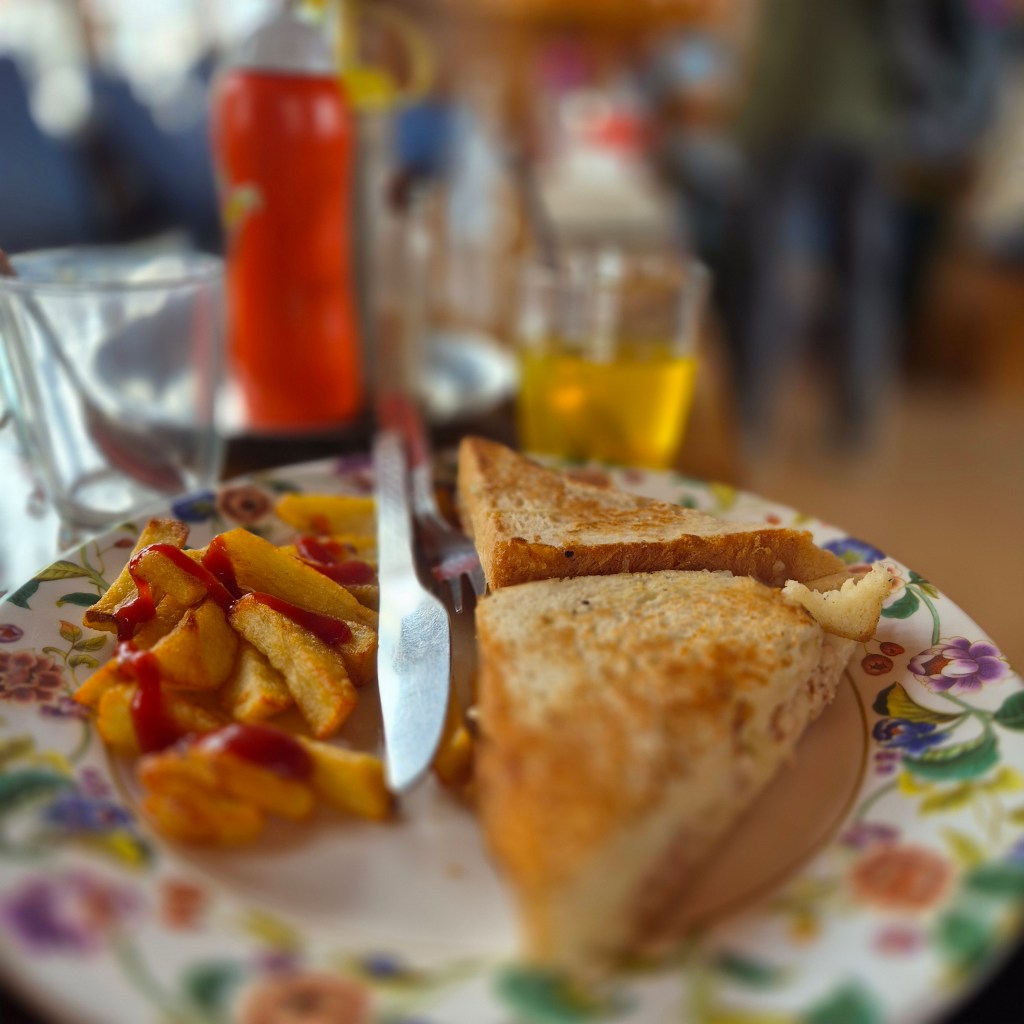
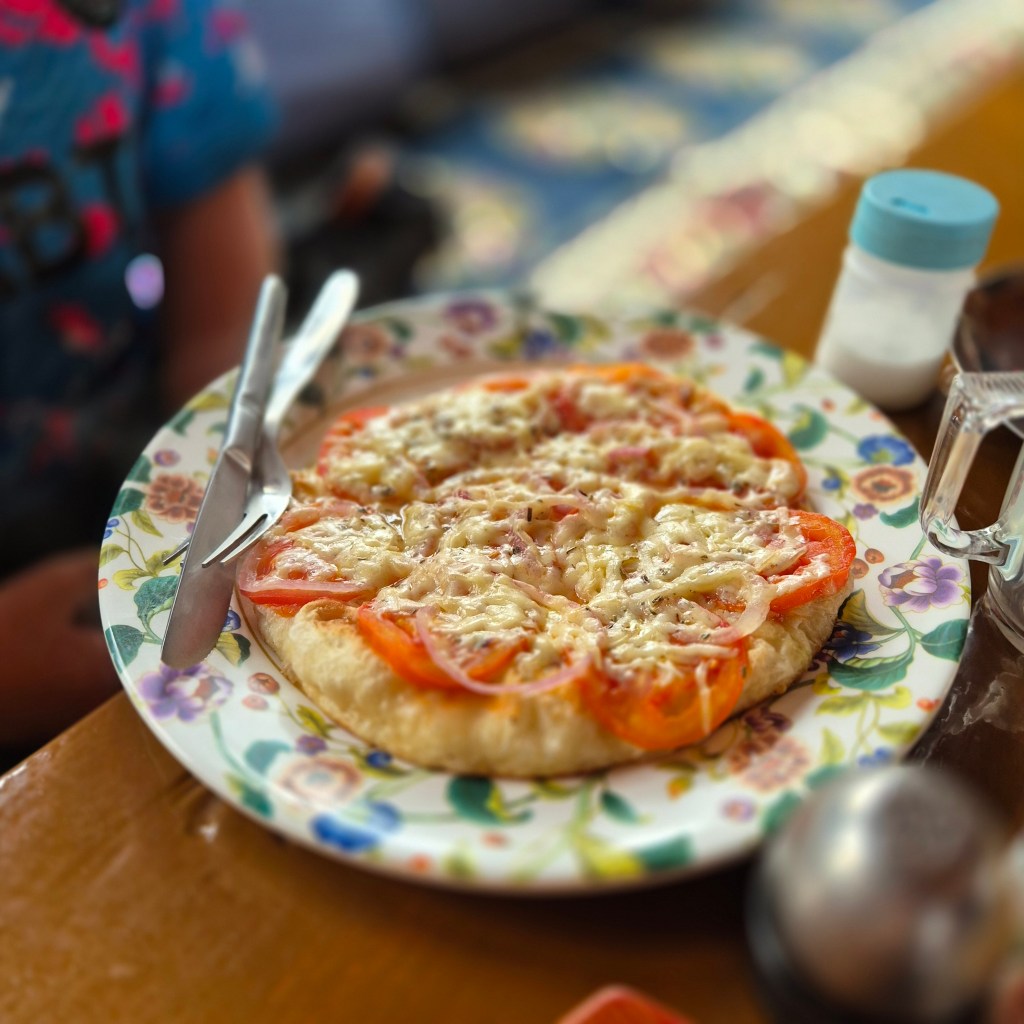
William and Martina at this point were really starting to lose all appetite, and it was a battle to make them both eat enough. William had taken to ordering mostly pizza, which in the circumstances, we just wanted him eating and taking on energy, so this was working, and we let it go. When our heads hit the pillow, we were instantly asleep, but the sleep wasn’t always deep, and again, vivid dreams plagued us. Altitude was definitely having an impact, and we were glad tomorrow was an acclimatisation day, although we really felt we could do with a total rest day. We did discuss this with our guides, as particularly Martina had caught a nasty chest infection and was now using our antibiotics. She was particularly exhausted at this time and really felt she needed the extra day to rest. On discussion with the guides, our main issue was accommodation. As it was high season, it would be very hard to find a room as all were booked up in advance. We decided to see how it would go, and if we had to turn back, then so be it. There would be no shame in that; it’s a stronger-willed person who does this than keeps on pushing forward.


 Family Russell-Smith Travel