Acclimatization Day in Dingboche: Conquering Nangkartshang Peak
For the first time in eight days, we got to stay in the same accommodation for two whole nights! It might seem like a strange thing to celebrate, but at this point, we’re exhausted, and not having to repack was just one less thing to do. We didn’t wake late (mainly because our bodies wouldn’t let us), but it was another freezing morning. With both parents catching the “Kumu cough” (Martina a lot worse than John), all we wanted to do was stay in our warm sleeping bags.
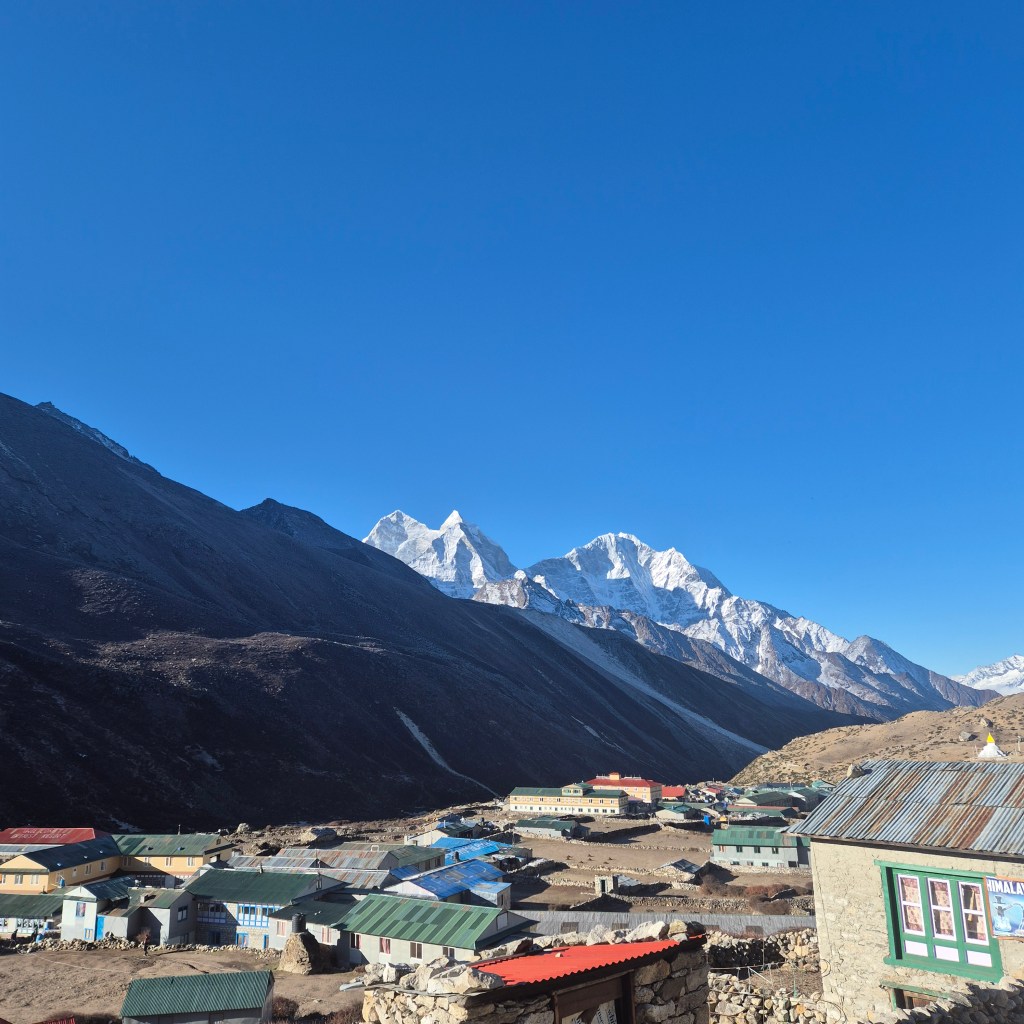
But today was not a rest day, but another crucial acclimatization day in Dingboche. While a full rest day sounded appealing after yesterday’s challenging ascent, the “climb high, sleep low” principle is paramount in any high-altitude hiking, especially with children, for effective acclimatization. Our objective for the day? A hike up Nangkartshang Peak (also known as Nagarjuna Hill), standing above Dingboche at approximately 5,083 meters (16,676 feet).
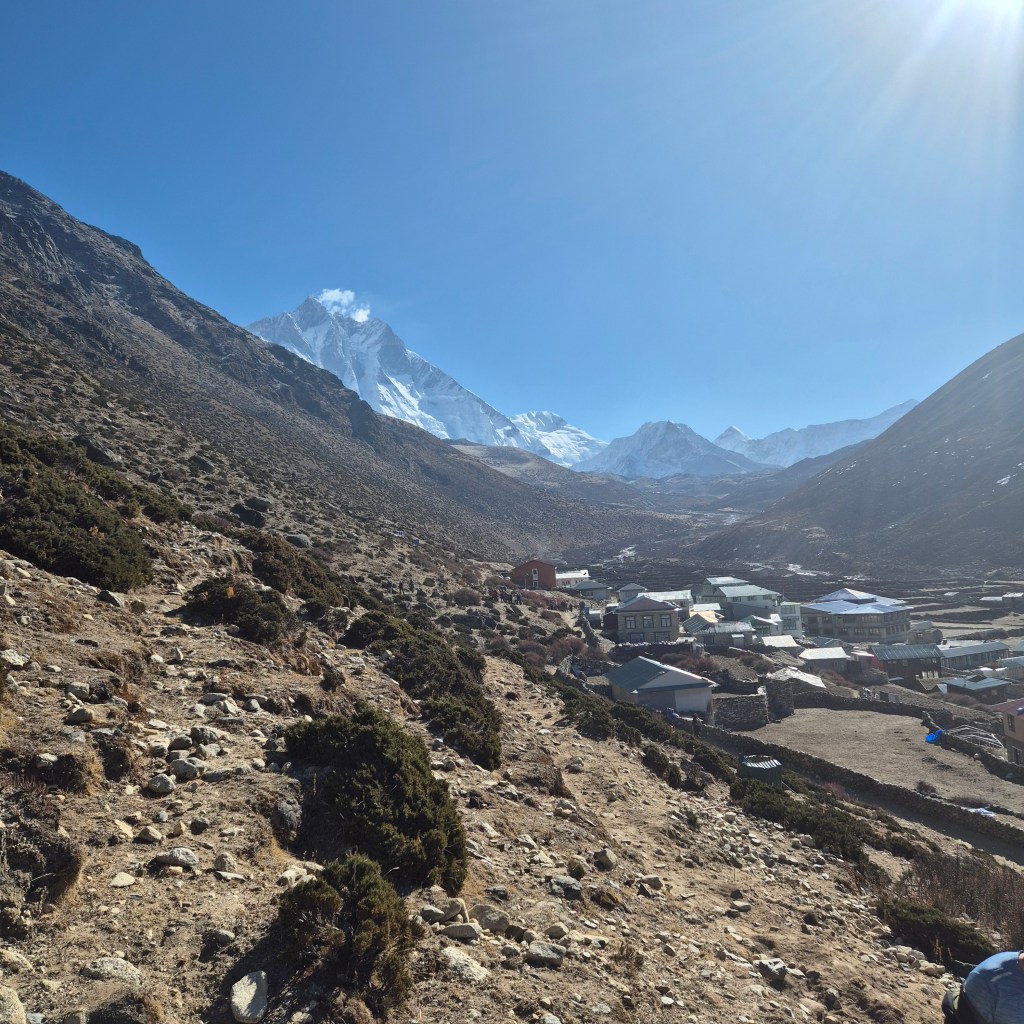
Dingboche itself sits at around 4,410 meters (14,469 feet), so this hike is a significant, but normally manageable, gain in elevation. The reason you do this hike is to challenge your body at a higher altitude during the day, then return to a slightly lower elevation to sleep, allowing your body to adapt.
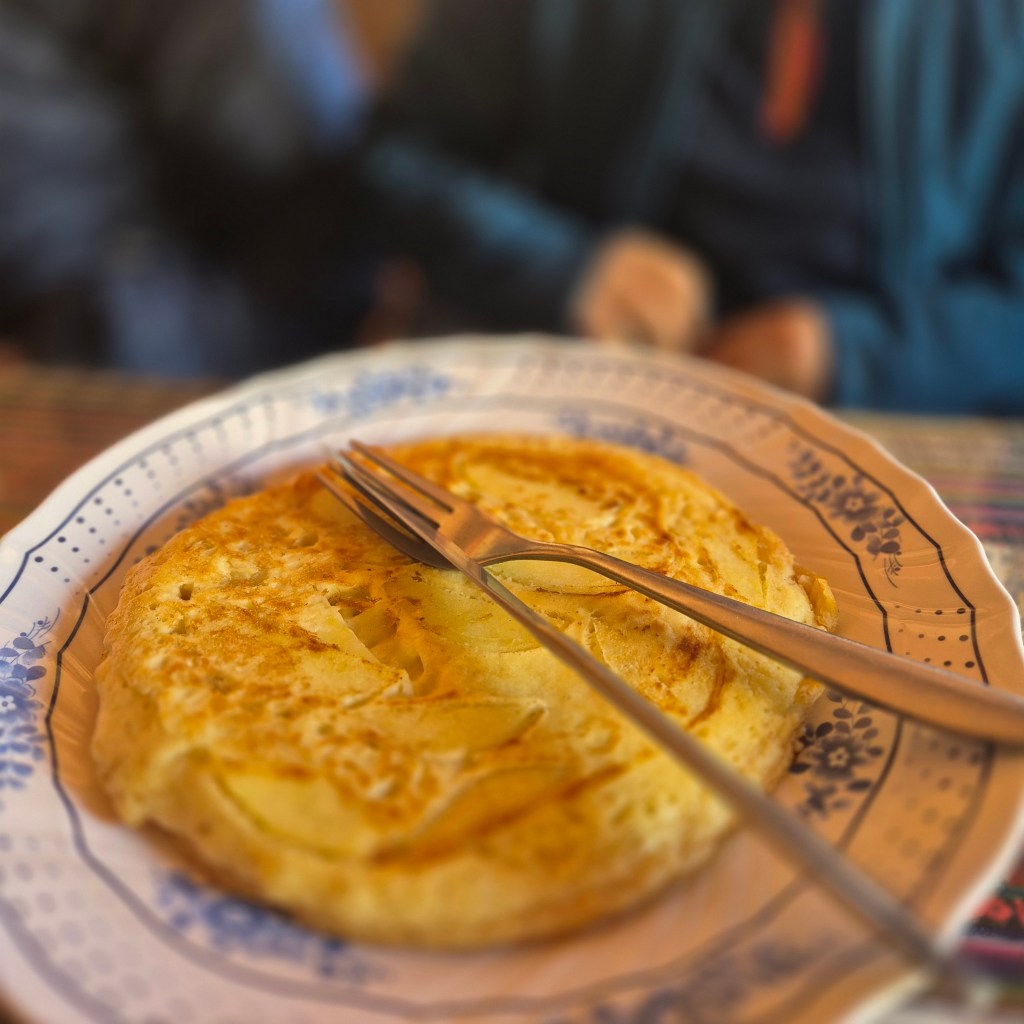
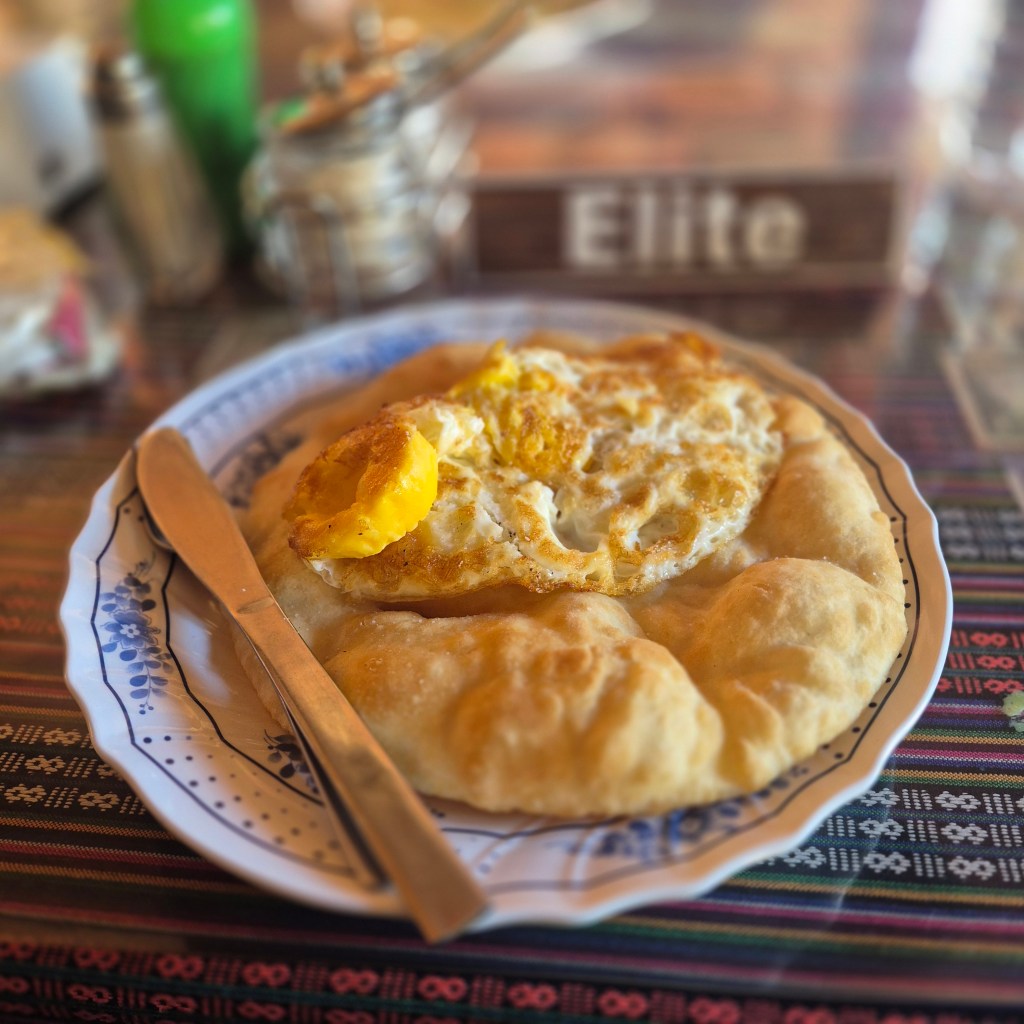
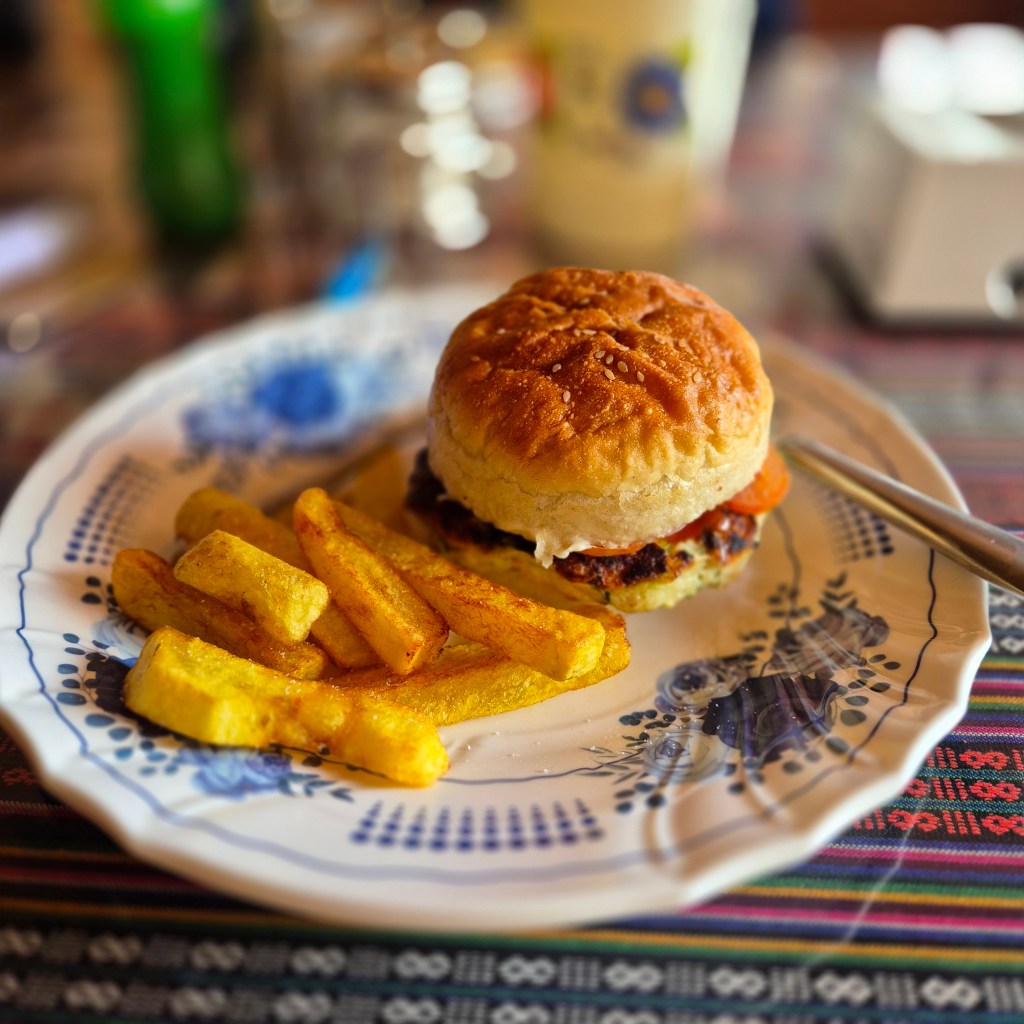
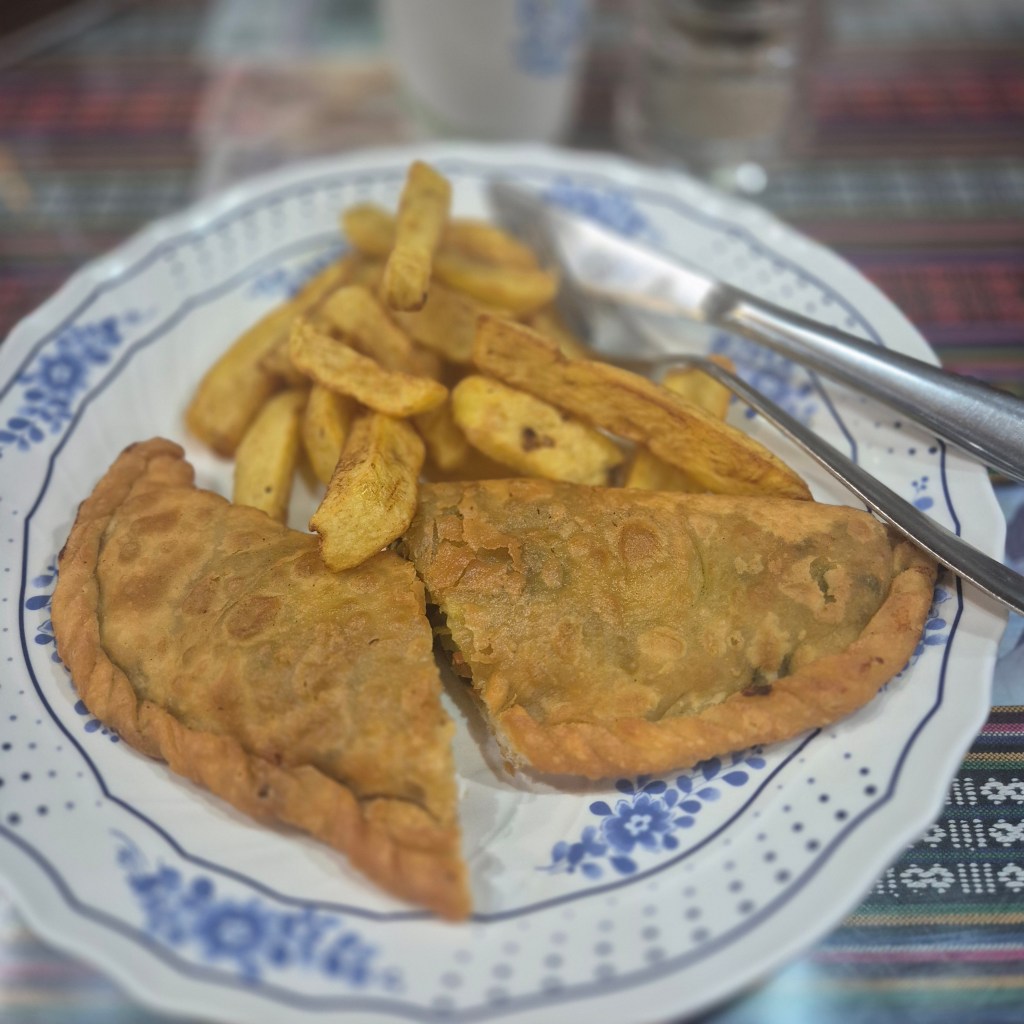
The morning began with that familiar mountain chill, but the promise of clear skies and incredible views spurred us on. For the first time in a few days, we woke to clear skies and spectacular views. As is the norm here on the EBC trek, we had another fantastic and filling breakfast, with John and Ben scoffing the lot and Martina and Will forcing themselves to eat as much as they could. Today, Martina was probably at her worst. She had started to take the antibiotics, but so far, they hadn’t helped, and her cough had become particularly bad and infected. It was draining for her, as the cough alone was exhausting, let alone being at altitude and having to physically exert herself. Her oxygen levels were checked by Aryan (our guide), and she was all good, staying in the 90% region, which was a very strong place to be at this altitude, even with a cough. It was also starting to cost a fair bit, as loo roll (to cough into on the hike) was beginning to get expensive!
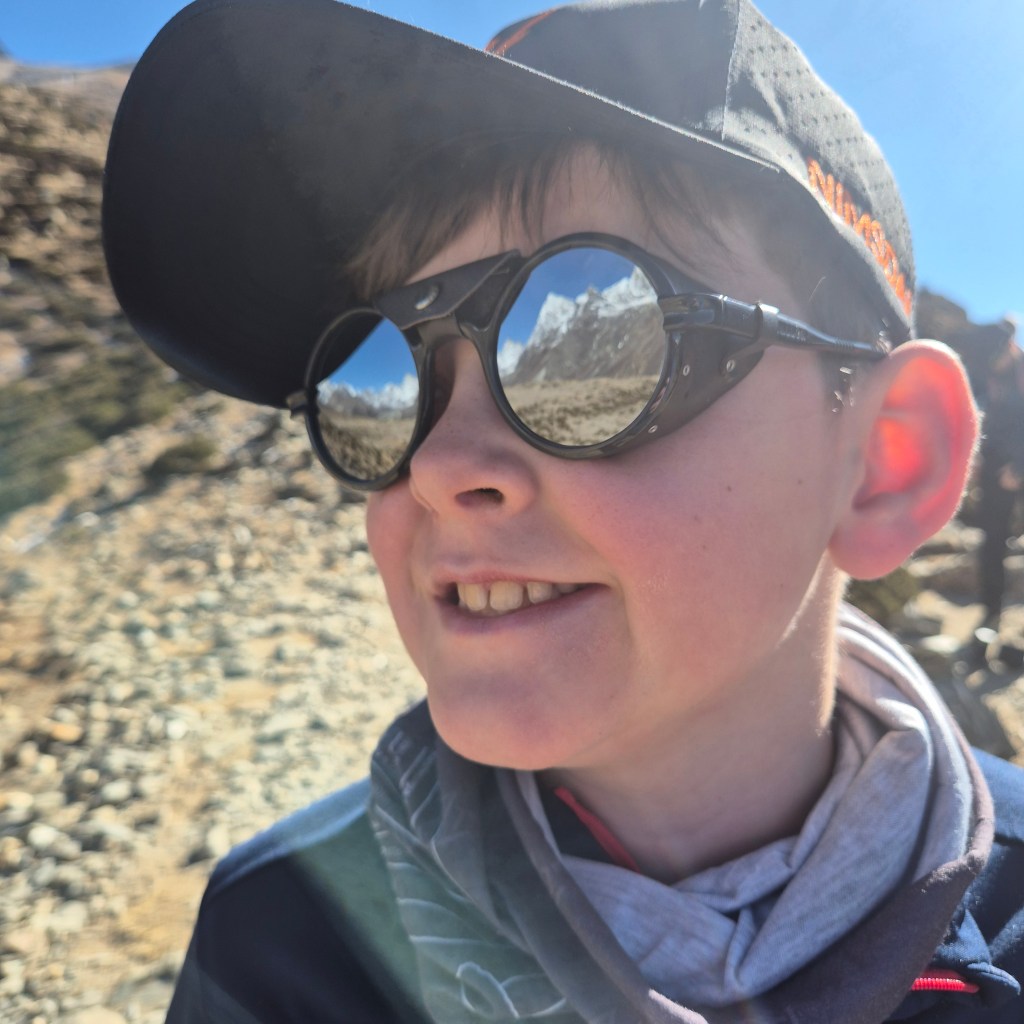
The path up Nangkartshang is a steady, steep ascent, taking us away from the village and quickly into the rugged, treeless landscape that defines these higher altitudes. We took it slow, and particularly slow for Martina, focusing on consistent breathing and frequent stops for water to stay hydrated. This was not an easy hike, and the aim is to make it to 5,000 meters (not necessarily the very top), as many don’t make it due to poor weather or sheer exhaustion from the hikes the day before. Martina and Will made it to 5,000 meters and then turned around with Sushan, exhausted but glad to reach the target. Meanwhile, John, Ben, and Aryan carried on.
We had not only been starved of oxygen but also starved of views so far with the weather and clouds blocking them, but today was a good day, and the clouds were generally clear. The view up the valley was spectacular. Ama Dablam towers high above the valley on the opposite side, and up the valley sits Island Peak, which (not surprisingly, due to the name) looks like an island in the valley, surrounded by higher mountains. It is pretty cool, and it was at that point we decided that as a family, our aim is to climb Island Peak together. Not yet, but definitely in a few years’ time when the boys are older. We could also see Lhotse, the fourth-highest mountain in the world, and glimpses of Makalu.
For Ben and John, reaching the top of Nangkartshang Peak was a moment of quiet triumph. The prayer flags fluttered in the crisp wind, offering a splash of vibrant color against the stark, magnificent backdrop of the Himalayas. We spent time soaking it all in, rehydrating, and simply marveling at the scale of the landscape. Ben was also super chuffed, as he (and John) are now 5,000-meter mountaineers, having summited their first 5,000-meter-plus peak. It was a powerful reminder of why we embarked on this journey.
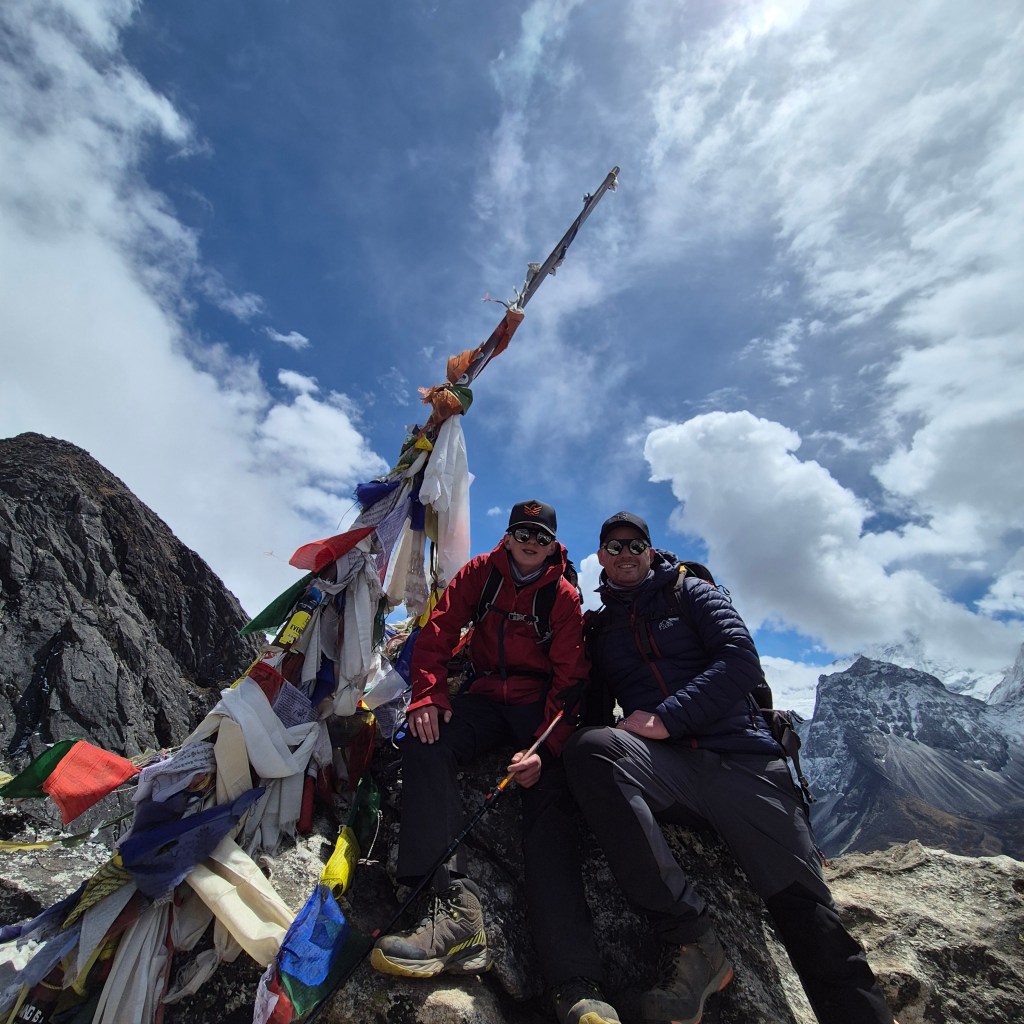
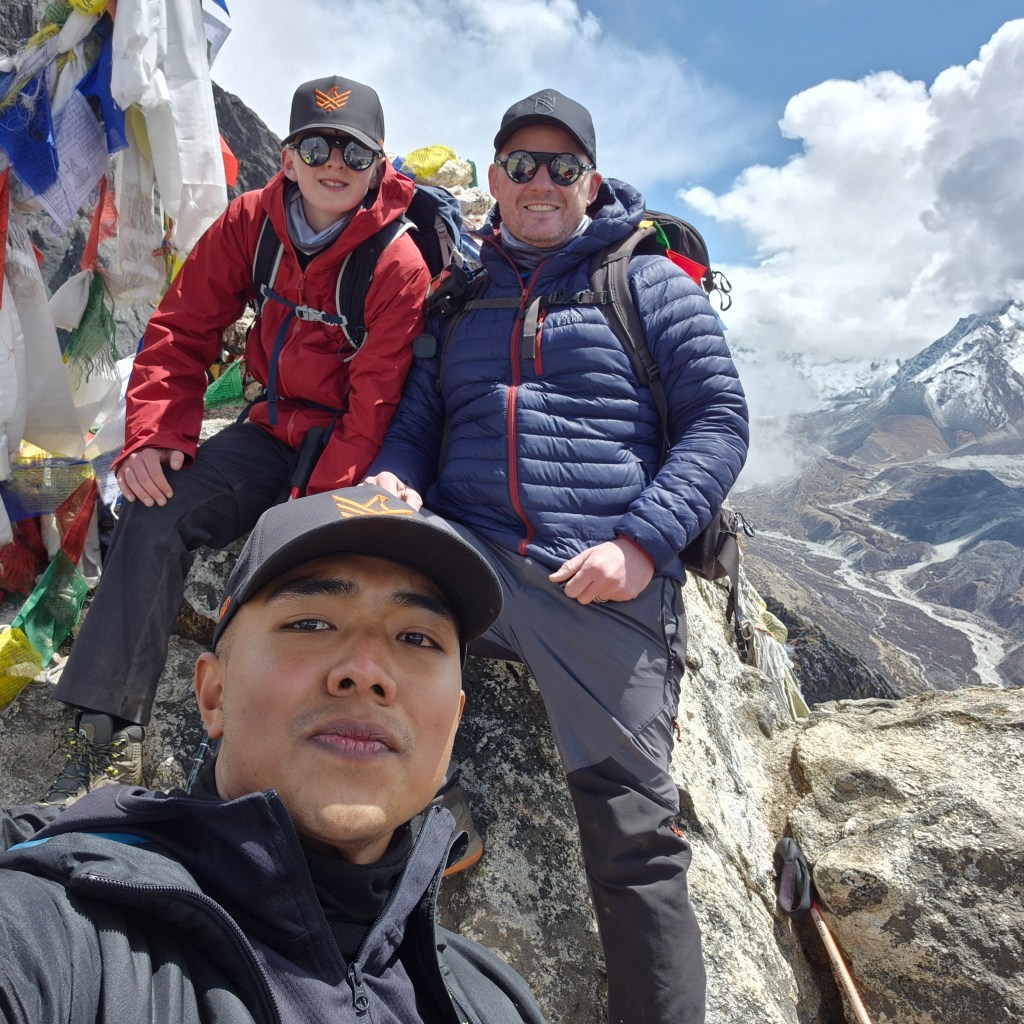
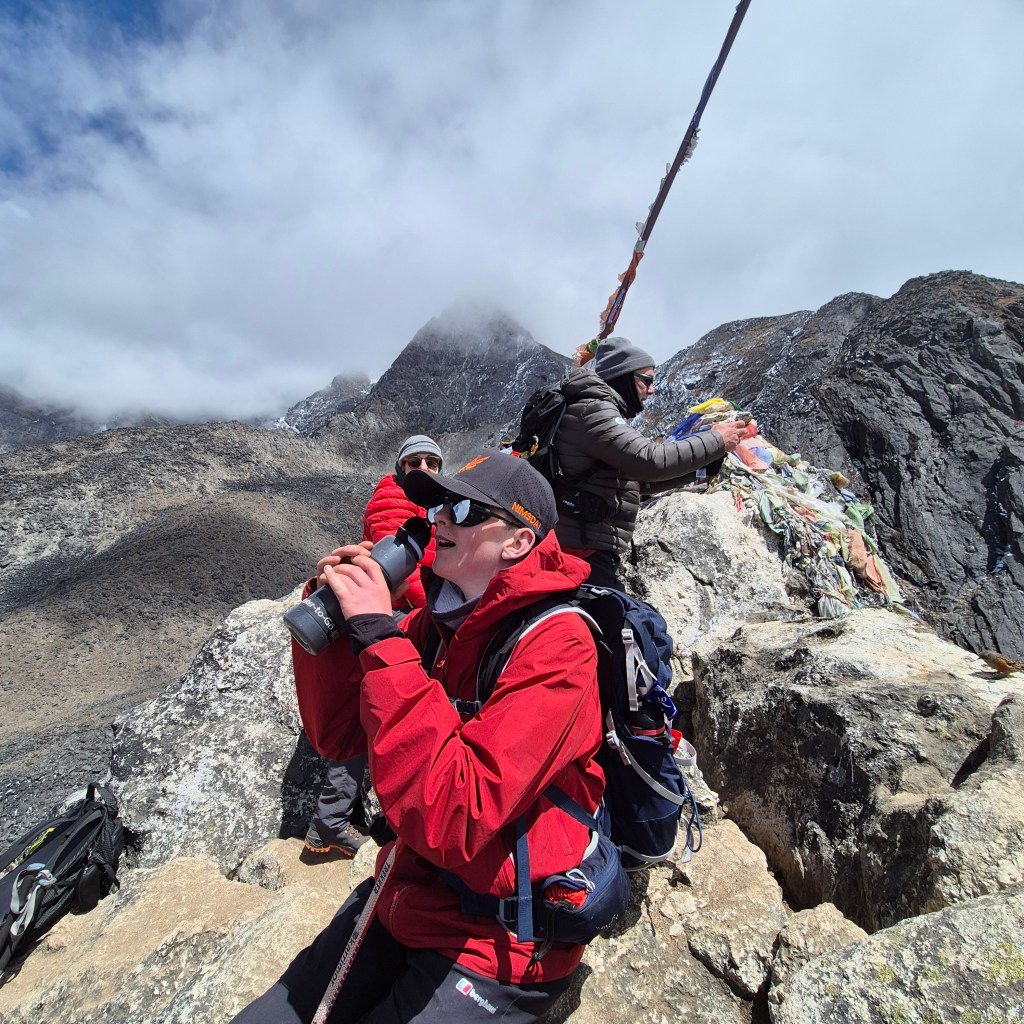
The descent back to Dingboche felt easier on the lungs, but the legs still felt the burn, and it was slow going and pretty exhausting. The last hour was hard, as all the excitement of hiking up had diminished and been replaced by exhaustion. This acclimatization hike isn’t just about preparing your body; it’s about strengthening your resolve and confirming your ability to handle the increasing demands of the trek. Although we physically didn’t feel 100%, we did feel like the goal of reaching EBC was 100% within our reach!
Back at the Hotel Dingboche Resort, we settled in for a well-deserved rest. While William and Martina were still struggling with their appetites, we continued to encourage them to eat and stay hydrated. We also all tried to have an afternoon nap, just to rest up and try to do nothing (something we all find hard to do). We played lots of UNO and drank lots of tea before having as big a dinner as we could eat, before checking our still strong oxygen levels and heading to bed early for some more vivid dreams.
Tomorrow, we’ll continue our journey, leaving Dingboche behind and pushing further into this incredible landscape and closer to our goal. We’re not going to lie. At this point, we feel battered and, to be honest, finding it harder than our hike towards K2. We were told to do this hike first before we did K2, but to be honest, in some ways, this has been harder, as with K2 we had rest days; here, there is no time to rest, and every day you are moving!



 Family Russell-Smith Travel