The journey from Lukla to Ramechhap is the final, brief, and often thrilling chapter of our Everest adventure. It marked the moment we officially left the high mountains behind and returned to the world of roads and cars. It’s a day of sharp contrasts!
The day began with an early wake-up call at the notorious Lukla airport. The weather here is famously unpredictable, so the first flights of the morning usually have the best chance of a clear takeoff. Boarding one of the small, twin-propeller planes felt like a true rite of passage. The planes are tiny, holding only about a dozen passengers, and the atmosphere was a mix of nervous energy and excitement.
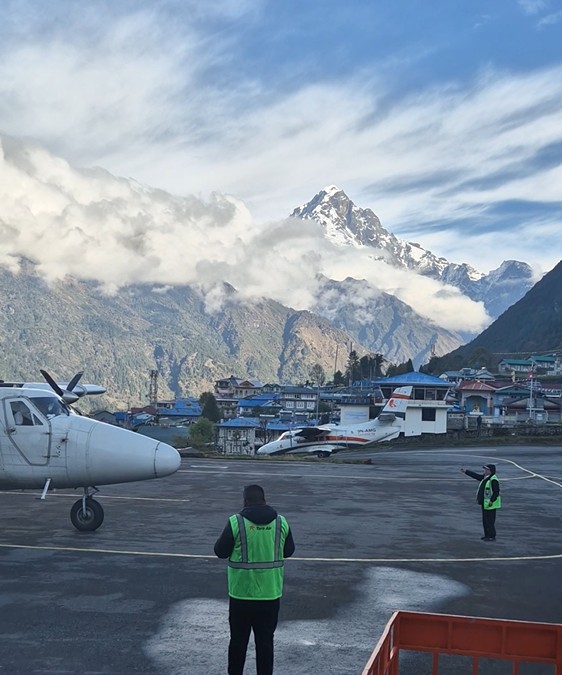
The takeoff itself is an experience unlike any other. Lukla’s Tenzing-Hillary Airport has a famously short and steep runway, built right on the side of a mountain. As the plane’s engines roared to life, we felt the swift acceleration as the aircraft hurtled down the runway and then, with a dramatic lurch, it became airborne, flying directly into a breathtakingly steep valley. Looking out the window, the views of the lush, terraced hills and the small villages clinging to the mountainsides were absolutely spectacular.
The flight was short, lasting only about 20 to 25 minutes. Below, the jagged, snow-capped peaks quickly gave way to rolling green hills and deep river valleys. It was a vivid reminder of the sheer distance and elevation we covered on our trek. The flight felt less like a traditional commercial journey and more like a scenic tour, a final aerial farewell to the world we had just conquered.
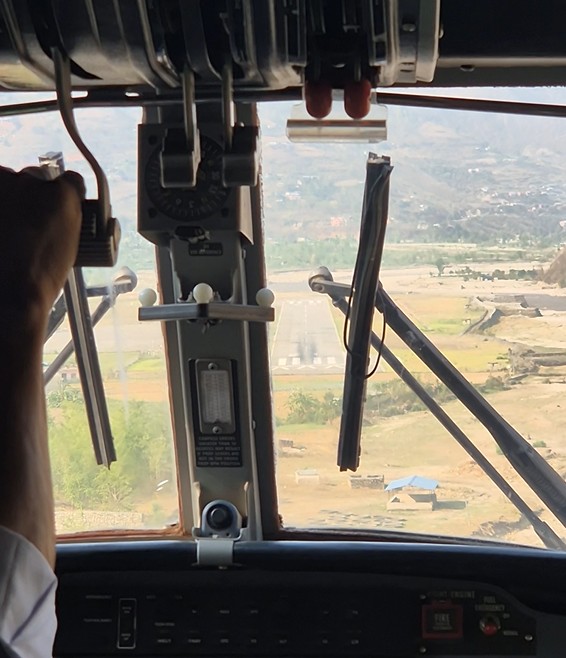
As the plane descended, the landscape flattened out, and the rugged mountain terrain was replaced by the farmlands of the lower hills. The landing at Ramechhap Airport was smooth and signalled the return to a more populated, accessible part of Nepal.
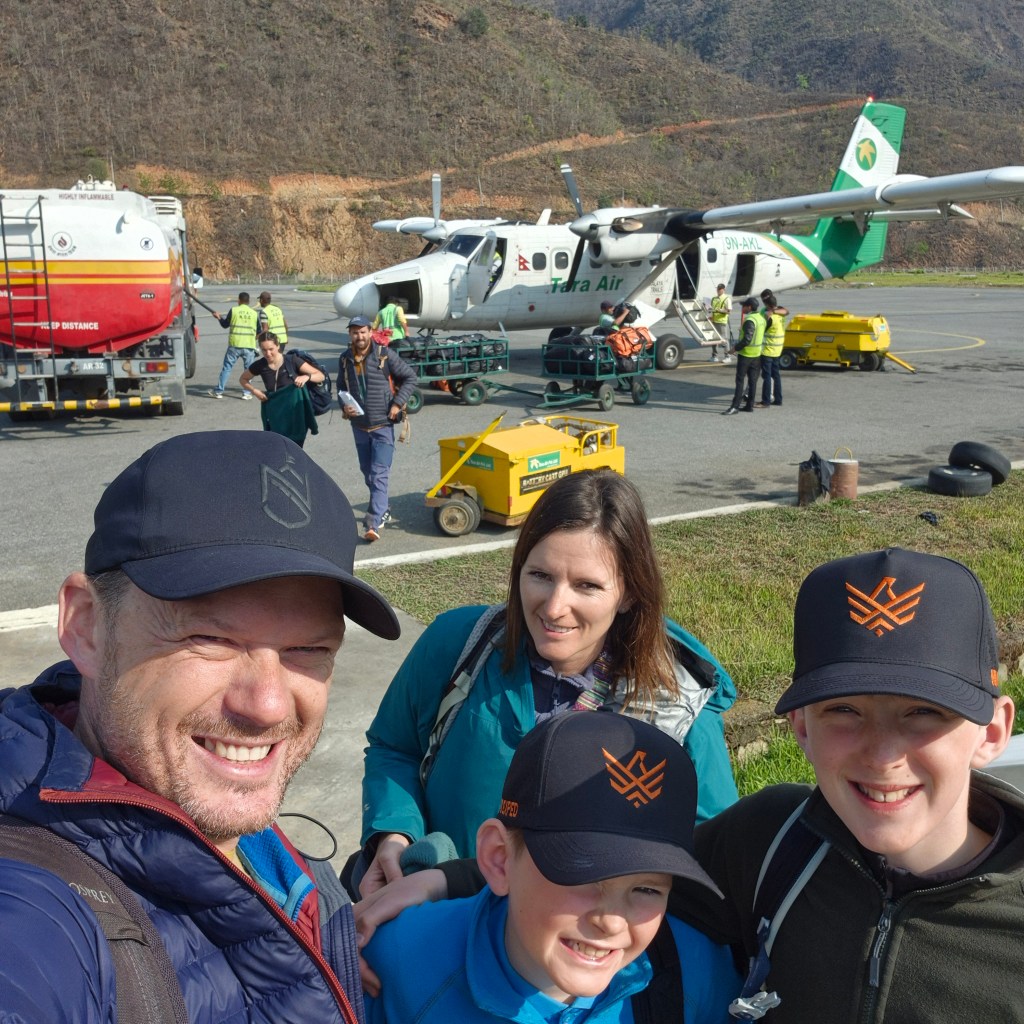
After the flight, we were met by a vehicle for the drive back to Kathmandu—a journey that is, in many ways, the final and most challenging leg of the trip. After the high-altitude challenges of the mountains, we now faced the very real, very bumpy reality of Nepali roads.
Leaving the small airport at Ramechhap, the transition back to civilization wasn’t immediate. It began with a long, arduous drive that was a stark contrast to the breathtaking vistas we’d grown accustomed to. The journey, which can take anywhere from four to seven hours, was a lesson in patience and resilience.
The road itself is a relentless series of twists, turns, and switchbacks. It is often unpaved, and a deep, thick dust hangs in the air, coating everything and everyone. The landscape is a mix of terraced farmlands, small villages, and a constant stream of chaotic traffic: buses, trucks, motorbikes, and other jeeps like ours.
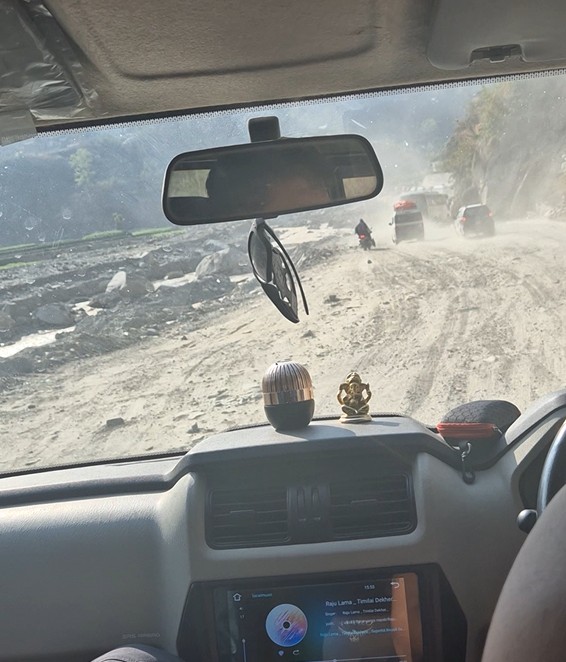
We quickly discovered that the journey is a full-body experience. The road is riddled with potholes, bumps, and rocky sections that had us bouncing and lurching for hours on end. A smooth ride is a luxury that simply doesn’t exist here! We were thrown from side to side, clutching our seats for stability as our vehicle navigated the rugged terrain.
Adding to the challenge were the frequent traffic jams. Construction, landslides, or simply the sheer volume of vehicles brought the entire journey to a halt. We spent time sitting in a line of stationary cars, inching forward a few feet at a time. It was certainly a test of patience, but it also offered a unique window into local life, as we watched villagers go about their daily routines while the world’s most frustrating traffic jam unfolded around them.
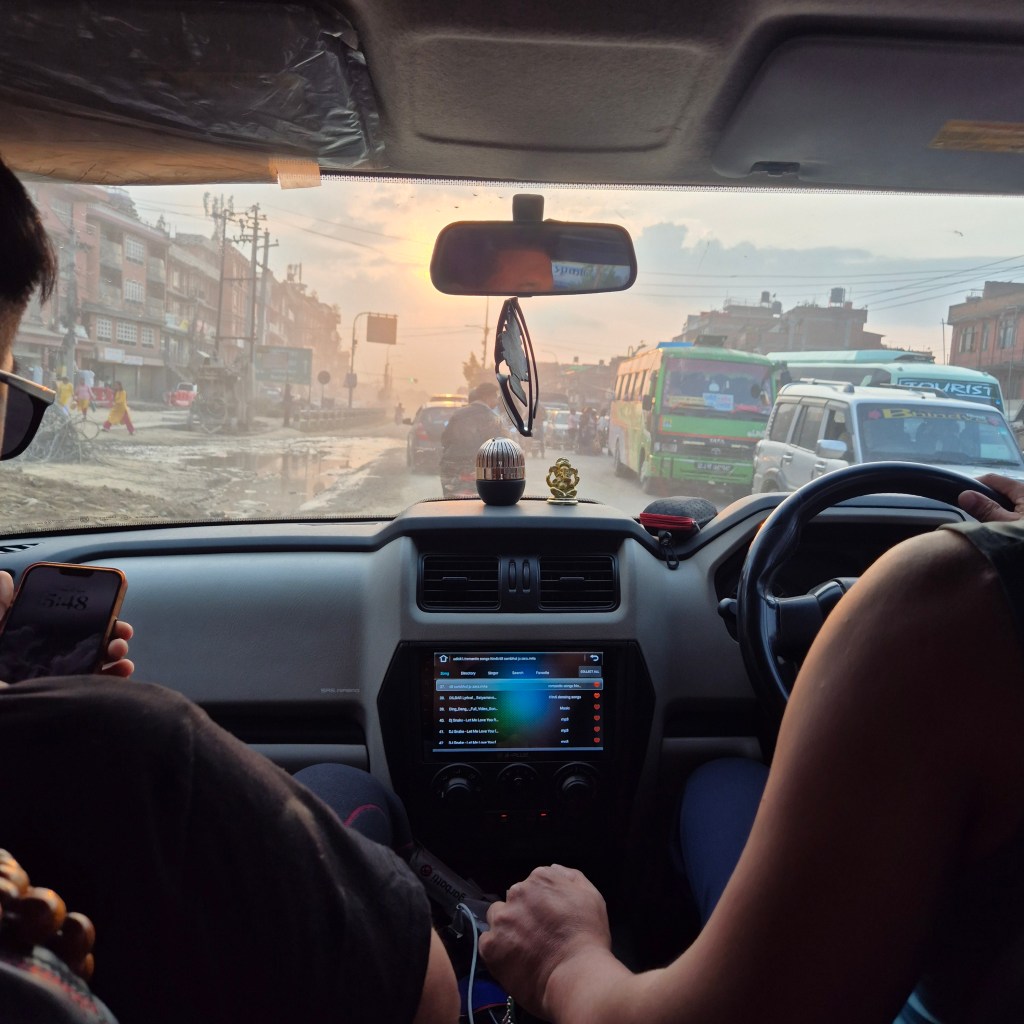
The drive was long and exhausting, a final, unexpected obstacle. But there was a sense of camaraderie among the other trekkers on the road, all enduring this final hurdle. When we finally reached the outskirts of Kathmandu, the bustling streets, the honking horns, and the vibrant chaos felt like a welcome return to normalcy after the long and bumpy road. Our Everest adventure was finally, officially complete!


 Family Russell-Smith Travel